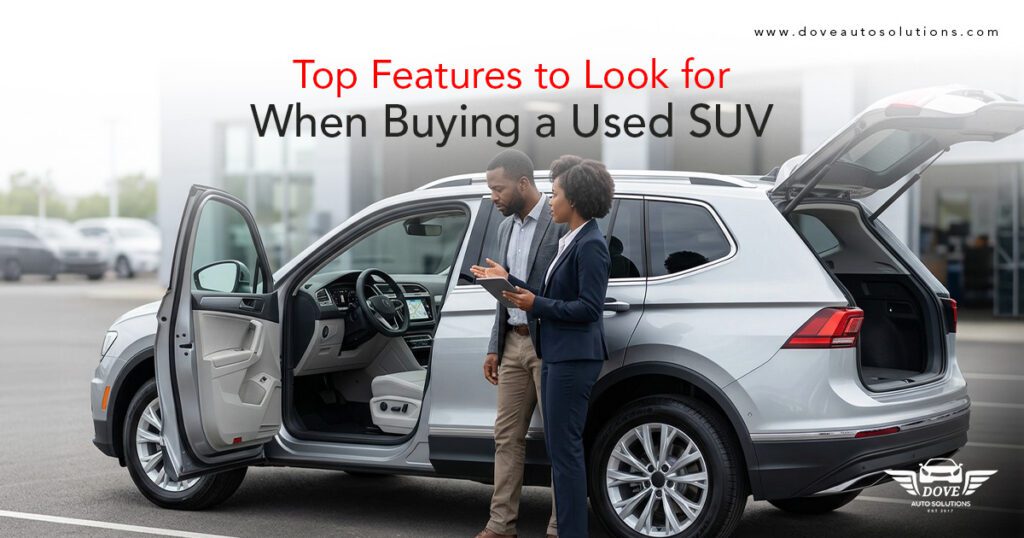
Buying a used SUV requires more than comparing the price, mileage, and exterior condition. The top features to look for when buying a used SUV include strong safety equipment, dependable engine and transmission performance, complete service records, practical interior space, good fuel economy, and affordable ownership costs. Buyers should also examine the tyres, brakes, suspension, electronics, bodywork, and undercarriage for wear or hidden damage. A vehicle history report and independent pre-purchase inspection can reveal accident repairs, mileage inconsistencies, neglected maintenance, or expensive mechanical faults. The best used SUV is a safe, reliable, and practical vehicle that fits your budget, family size, driving habits, and local road conditions.
What should you check before buying a used SUV?
Before buying a used SUV, check its mechanical condition, safety features, maintenance history, mileage, fuel efficiency, comfort, cargo capacity, technology, and likely repair costs. A good second-hand SUV should drive smoothly, have consistent records, show no unexplained warning lights, and pass an independent inspection.
Used SUVs suit families, commuters, travellers, and drivers who need extra ground clearance or luggage space. However, an attractive price can hide poor servicing, accident damage, worn components, or costly electronic problems.
1. Safety features and crash protection
Safety should be a priority when comparing pre-owned SUVs. Check the exact model year and trim because equipment can differ across versions.
Essential safety equipment
Look for anti-lock brakes, electronic stability control, traction control, multiple airbags, and child-seat mounting points. These features improve control and protection during sudden stops, skids, or collisions.
Driver-assistance systems
Useful technology includes blind-spot monitoring, automatic emergency braking, lane departure warning, parking sensors, and rear cross-traffic alert. Test each system because damaged cameras or sensors can be expensive to replace.
2. Engine and transmission performance
The engine and transmission are among the most expensive components of any used SUV, so both should be checked carefully before purchase. Start the engine when it is cold and listen for knocking, rattling, or uneven idling, then look for smoke, oil leaks, overheating, weak acceleration, or warning lights during the test drive. An automatic transmission should shift smoothly without slipping, hesitation, or harsh jolts, while a manual gearbox should change cleanly and the clutch should engage without grinding or vibration.
Where possible, test the all-wheel-drive or four-wheel-drive system and watch for warning lights, binding during turns, uneven tyre wear, or drivetrain noises, as these may indicate problems with the differential or transfer case.
3. Service history and vehicle records
A complete service history is one of the clearest signs that a used SUV has been maintained responsibly, and it can also help verify mileage and major scheduled work. Review invoices, service-book entries, oil-change records, and repair receipts to confirm that the timing belt, transmission fluid, coolant, brakes, and model-specific components were serviced on time. A vehicle history report may also reveal accidents, insurance claims, ownership changes, title problems, or mileage discrepancies, but it should always be used alongside a physical inspection because not every incident is recorded in a database.
4. Mileage and physical condition
Mileage matters when evaluating a used SUV, but its age, previous use, and maintenance history are equally important, as a well-serviced high-mileage vehicle may be more reliable than a neglected low-mileage one. Compare the odometer reading with the SUV’s age and service records, keeping in mind that very low mileage can still lead to issues with tyres, seals, fluids, and the battery if the vehicle has remained unused for long periods. Check whether the mileage shown is consistent with the condition of the steering wheel, pedals, seats, and interior controls, as excessive wear may suggest heavier use than reported.
Inspect the exterior for mismatched paint, uneven panel gaps, rust, overspray, dents, and poorly aligned doors, then check the undercarriage for leaks, corrosion, damaged suspension components, or signs of heavy off-road use. Also examine the wheel arches, chassis, and lower body panels for hidden rust or impact damage. A thorough inspection can help reveal whether the SUV has been carefully maintained or subjected to rough driving and poor repairs.
5. Fuel economy and ownership costs
The purchase price is only one part of a used SUV’s total cost, as fuel, insurance, servicing, tyres, taxes, and replacement parts can significantly affect long-term affordability. Compare official fuel-economy figures with real-world owner reports and consider whether the vehicle will mainly be used for city driving, motorway travel, towing, or short daily trips. A hybrid or smaller turbocharged engine may help reduce fuel consumption, while a larger engine may provide stronger performance but usually costs more to run.
Research the price and availability of common items such as brakes, tyres, suspension parts, batteries, filters, and fluids before making a decision. Premium, imported, or uncommon SUVs may require specialist labour and more expensive components, which can increase repair bills. It is also worth checking insurance rates, road taxes, warranty options, and expected depreciation to understand the SUV’s true ownership cost.
6. Space, comfort and technology
A practical SUV should fit your daily routine rather than simply look impressive. Evaluate passenger comfort, luggage needs, parking conditions, visibility, and available technology before making a decision. Consider how easily children, elderly passengers, or taller adults can enter and exit the vehicle. Check whether the driving position provides clear visibility and whether the SUV feels manageable in narrow streets or crowded car parks. The right combination of interior space, comfort, convenience, and technology can make everyday journeys safer and more enjoyable.
Passenger and cargo space
Sit in every seating row and check headroom, legroom, access, and visibility. Fold the rear seats to confirm the cargo area can carry luggage, shopping, pushchairs, sports equipment, or work items.
Ride and handling
Drive on smooth, rough, and curved roads where possible. The SUV should steer accurately, brake confidently, remain stable, and absorb bumps without excessive noise or bouncing.
Infotainment and electrical features
Test the touchscreen, Bluetooth, cameras, climate control, windows, powered seats, locks, lights, and tailgate. Small electrical faults can involve expensive motors, wiring, sensors, or control units.
7. Tyres, brakes and suspension
Tyres, brakes, and suspension directly affect the safety, comfort, and handling of a used SUV, while their condition can also reveal how the vehicle was previously driven and maintained. Check the tyres for sufficient tread depth, sidewall damage, age, and even wear, as irregular wear may indicate poor alignment, incorrect pressure, worn suspension parts, or accident damage. During the test drive, the SUV should stop in a straight line without grinding, squealing, vibration, or a soft brake pedal, and the visible discs and pads should not show excessive wear.
Ask when the brake fluid was last replaced and listen for knocking, creaking, or clunking when driving over uneven roads. Excessive bouncing, unstable steering, or uneven ride height may suggest worn shocks, bushes, joints, or springs that could require immediate repair.
Why a pre-purchase inspection matters
A pre-purchase inspection is one of the best ways to protect yourself when buying a used SUV because it can uncover mechanical, structural, and electrical problems that may not be obvious during a short test drive. A qualified independent mechanic can examine the engine, transmission, brakes, suspension, electronics, body structure, diagnostic codes, and undercarriage more thoroughly than most buyers. Choose a mechanic who is not connected to the seller and who understands the specific make or model, as some SUVs have known issues that require closer attention.
The inspection report can help you estimate upcoming repair costs, negotiate a fairer price, plan future maintenance, or avoid a vehicle with serious defects. Spending money on an inspection before purchase can prevent much larger expenses later.
Final used SUV buying checklist
| What to check | Recommended action | Why it matters |
|---|---|---|
| Safety features | Confirm that the airbags, brakes, stability control, cameras, sensors, and driver-assistance systems work correctly. | Proven safety equipment helps protect passengers and improves control during emergencies. |
| Mechanical performance | Test the engine, transmission, steering, brakes, suspension, and all-wheel-drive or four-wheel-drive system. | Smooth and reliable performance can prevent expensive repairs after purchase. |
| Maintenance records | Review the service book, repair invoices, oil-change records, and vehicle history report. | Transparent records help confirm proper maintenance, mileage, ownership, and previous damage. |
| Mileage and condition | Compare the mileage with the SUV’s age, service history, interior wear, bodywork, and undercarriage. | Sensible mileage and good physical condition usually indicate responsible ownership. |
| Running costs | Calculate expected fuel, insurance, servicing, tyre, tax, repair, and replacement-part expenses. | Manageable ownership costs make the used SUV more affordable over the long term. |
| Passenger and cargo space | Check seating comfort, access, visibility, storage areas, and cargo capacity with the rear seats folded. | Useful interior space ensures the SUV suits your passengers, luggage, and daily routine. |
| Technology and electronics | Test the infotainment system, Bluetooth, cameras, climate control, windows, lights, locks, seats, and tailgate. | Fully working technology improves convenience and reduces the risk of costly electrical repairs. |
| Test drive | Drive the SUV on smooth, rough, curved, and faster roads while checking for noises, vibrations, warning lights, or poor handling. | A detailed test drive can reveal faults that may not be visible during a stationary inspection. |
| Vehicle comparison | Compare the price, condition, mileage, features, history, and ownership costs of similar used SUVs. | Comparing alternatives helps determine whether the vehicle offers fair value. |
| Independent inspection | Ask a qualified mechanic who is not connected to the seller to inspect the SUV before purchase. | A pre-purchase inspection can identify hidden defects and support price negotiations. |
| Seller transparency | Avoid sellers who refuse to provide documents, answer questions, allow a test drive, or permit an independent inspection. | A transparent seller reduces the risk of undisclosed mechanical, legal, or ownership problems. |
| Final decision | Choose the SUV based on safety, reliability, condition, practicality, and long-term value rather than appearance or a low price alone. | A careful decision helps you purchase a dependable pre-owned SUV that meets your needs. |
Final thoughts
Buying a used SUV is a major decision, so it is important to look beyond price, appearance, and brand reputation. Focus on safety features, engine and transmission condition, service history, mileage, fuel economy, interior space, technology, tyres, brakes, suspension, and overall ownership costs. Always take a detailed test drive, review the vehicle records, compare similar models, and arrange an independent pre-purchase inspection before committing. A careful evaluation will help you avoid hidden problems and choose a reliable used SUV that delivers comfort, practicality, safety, and long-term value.
Looking for a Reliable Used SUV in Grenada?
Contact Dove Auto Solutions for help finding a safe, dependable, and practical used SUV with the right features, condition, space, and long-term value for your needs.
Contact Us